A Comprehensive Guide to Tummy Tuck Recovery Timeline
What Should You Expect During the Initial Tummy Tuck Recovery Period?
The first few days after a tummy tuck are focused on rest, safe movement, and keeping tension off the incision. Most patients need help at home for the first 24 to 48 hours because standing upright, getting in and out of bed, and preparing meals can be difficult.
Common early symptoms include tightness, swelling, bruising, soreness, and temporary numbness. Patients usually rest with the upper body elevated and knees bent to reduce pulling across the abdomen.
Helpful early recovery steps include:
- Take medication exactly as directed.
- Walk short distances around the home starting as advised to support circulation.
- Wear the compression garment as instructed.
- Avoid lifting, bending, driving, and household tasks until cleared by the surgical team.
How Does the Tummy Tuck Recovery Timeline Progress Week by Week?
Recovery varies by patient and procedure type, but most tummy tuck patients follow a general pattern.
Weeks 1 to 2: Rest and Basic Mobility
The first one to two weeks usually involve the most discomfort and swelling. Patients often walk slightly bent at the waist at first and gradually stand more upright as tightness improves.
Most people can return to low-activity jobs in one to two weeks if they are no longer taking prescription pain medication and their work does not require lifting or physical strain. Driving should wait until narcotic pain medication has stopped and movement is comfortable enough to react safely.
For additional planning, patients can review how long recovery time is after a tummy tuck and how to recover comfortably from a tummy tuck.
Weeks 3 to 4: Better Stamina
By weeks three and four, many patients feel more mobile and need less help with daily routines. Swelling is still normal, but bruising and soreness usually improve.
Light household tasks may be reasonable if they do not involve bending, straining, or lifting. More active jobs may still require additional time off or modified duties.
Weeks 6 to 8: Return to More Normal Activity
Many restrictions begin to ease around six to eight weeks, depending on the surgeon’s guidance. Light cardio and normal daily routines may resume first. Heavy lifting, core workouts, strenuous exercise, and contact sports should wait until the surgical team confirms it is safe.
Patients planning to resume fitness can read about the best exercises after tummy tuck surgery.
Months 3 to 6+: Final Refinement
Swelling can continue to improve for several months. Scars usually flatten and fade gradually over 12 to 18 months, especially with sun protection and proper scar care.

| Recovery Phase | What to Expect | Main Restrictions |
|---|---|---|
| Weeks 1–2 | Rest, soreness, swelling, short walks | No driving on narcotics, lifting, bending, or strenuous activity |
| Weeks 3–4 | Better mobility and stamina | Avoid heavy chores and exercise |
| Weeks 6–8 | Gradual return to normal routines | Wait for clearance before core work or heavy lifting |
| Months 3–6+ | Swelling improves; scars mature | Follow scar care and sun protection instructions |
How Do Tummy Tuck Types Affect Recovery?
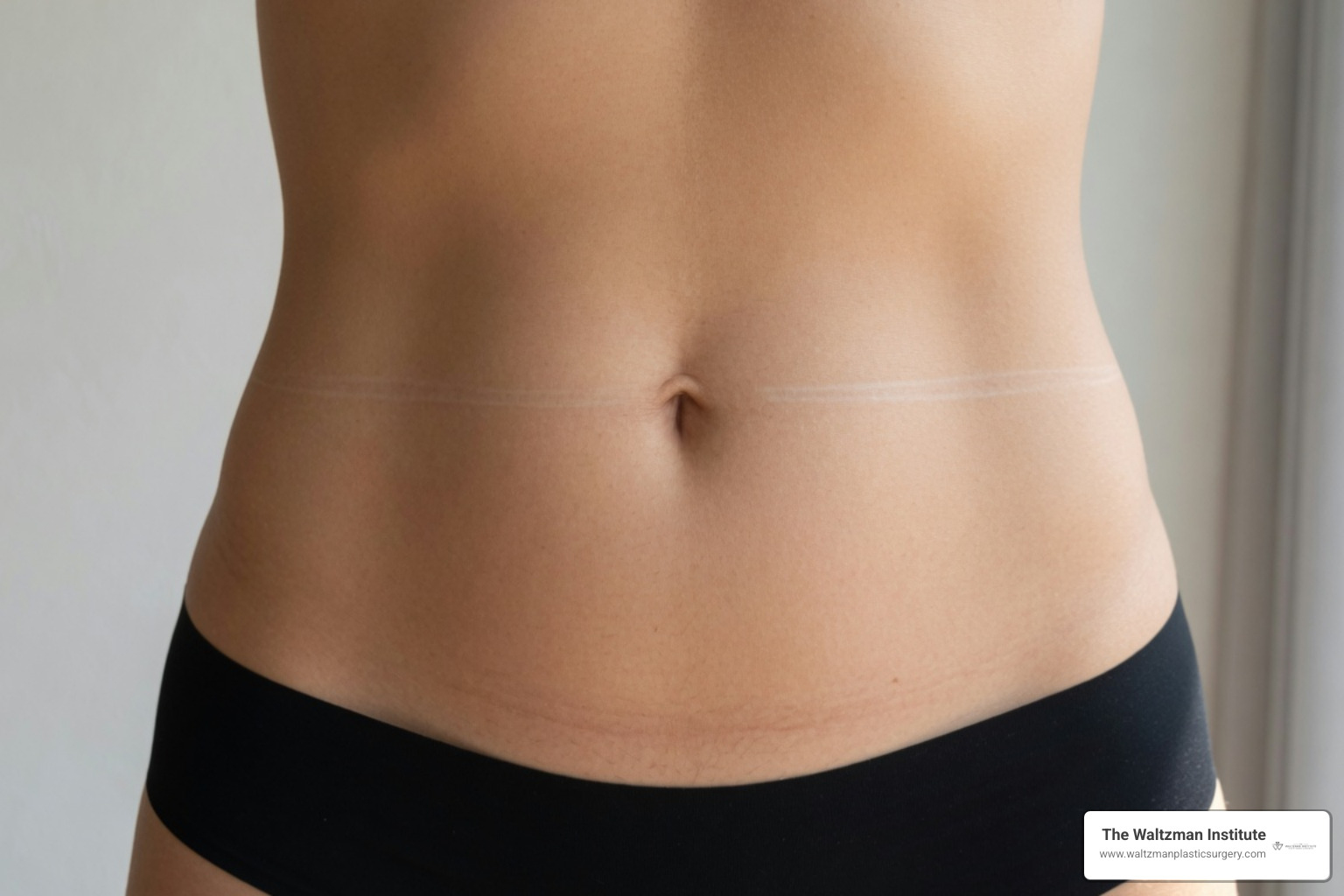
Recovery depends on how much correction is performed.
- Mini Tummy Tuck: Usually involves a shorter incision and less tissue adjustment below the belly button. Recovery may be faster than a full tummy tuck.
- Full Abdominoplasty: Treats the upper and lower abdomen, often including muscle repair and belly button repositioning. Most patients need six to eight weeks before returning to strenuous activity.
- Extended Abdominoplasty: Addresses the abdomen, flanks, and lower back area. Because more tissue is treated, swelling and tightness may last longer.
Adding liposuction can also increase swelling and bruising. Patients considering combined contouring can learn whether to add liposuction to a tummy tuck.
Board-certified plastic surgeon Dr. Waltzman focuses on staying at the forefront of advanced plastic surgery techniques like Preservé by Motiva and ELIXIR MD™, resulting in fewer scars, a faster recovery, and more natural-looking results.
How Can Patients Support a Smoother Recovery?

Preparation makes recovery easier. Before surgery, patients should arrange transportation, confirm help at home, prepare easy meals, and set up a recovery area with pillows, medications, water, phone chargers, and loose clothing.
To help the body recover smoothly:
- Prioritize rest and avoid pushing activity too soon.
- Eat protein-rich meals and stay hydrated.
- Take short walks as directed to support circulation.
- Avoid nicotine and alcohol during the healing period.
- Wear compression garments as instructed.
- Keep follow-up appointments and ask the surgical team before increasing activity.
Once incisions are fully closed and the surgeon approves, silicone gel or silicone sheets may help scars soften and flatten. Patients can learn more about taking care of a tummy tuck scar.
What Warning Signs Require Medical Attention?
Some swelling, bruising, tightness, and discomfort are expected. Patients should contact their plastic surgery practice if they notice fever, spreading redness, worsening pain, foul-smelling drainage, sudden one-sided swelling, or unusual fluid buildup.
Emergency symptoms require immediate medical care or a call to 911. These include sudden chest pain, shortness of breath, coughing up blood, fainting, or severe calf pain with swelling or redness.
What Are Frequently Asked Questions About Tummy Tuck Recovery?
When can driving and chores resume?
Driving is usually possible after one to two weeks if prescription narcotic pain medication has stopped and movement is comfortable. Light chores may resume gradually, but heavy lifting, scrubbing, bending, and strenuous tasks should wait until the surgeon clears them.
How long is a compression garment worn?
Many patients wear compression most of the day for several weeks, then taper use based on the surgeon’s instructions. The garment helps support healing tissues and manage swelling.
Can a tummy tuck offer functional benefits?
For some patients, abdominoplasty can improve core support, posture, and irritation caused by excess abdominal skin. Patients can read more about how a tummy tuck can be medically beneficial.
How Can Patients Schedule a Tummy Tuck Consultation?
Tummy tuck recovery is easier with planning, realistic expectations, and clear post-operative instructions. The best timeline depends on the procedure, health history, and healing response.
Patients can review the main Tummy Tuck service page or the Tummy Tuck LP page for procedure details.
For personalized guidance, patients can schedule a consultation with board-certified plastic surgeon Dr. Josh Waltzman at The Waltzman Institute in Long Beach, CA, serving Southern California, Los Angeles, and Orange County.